

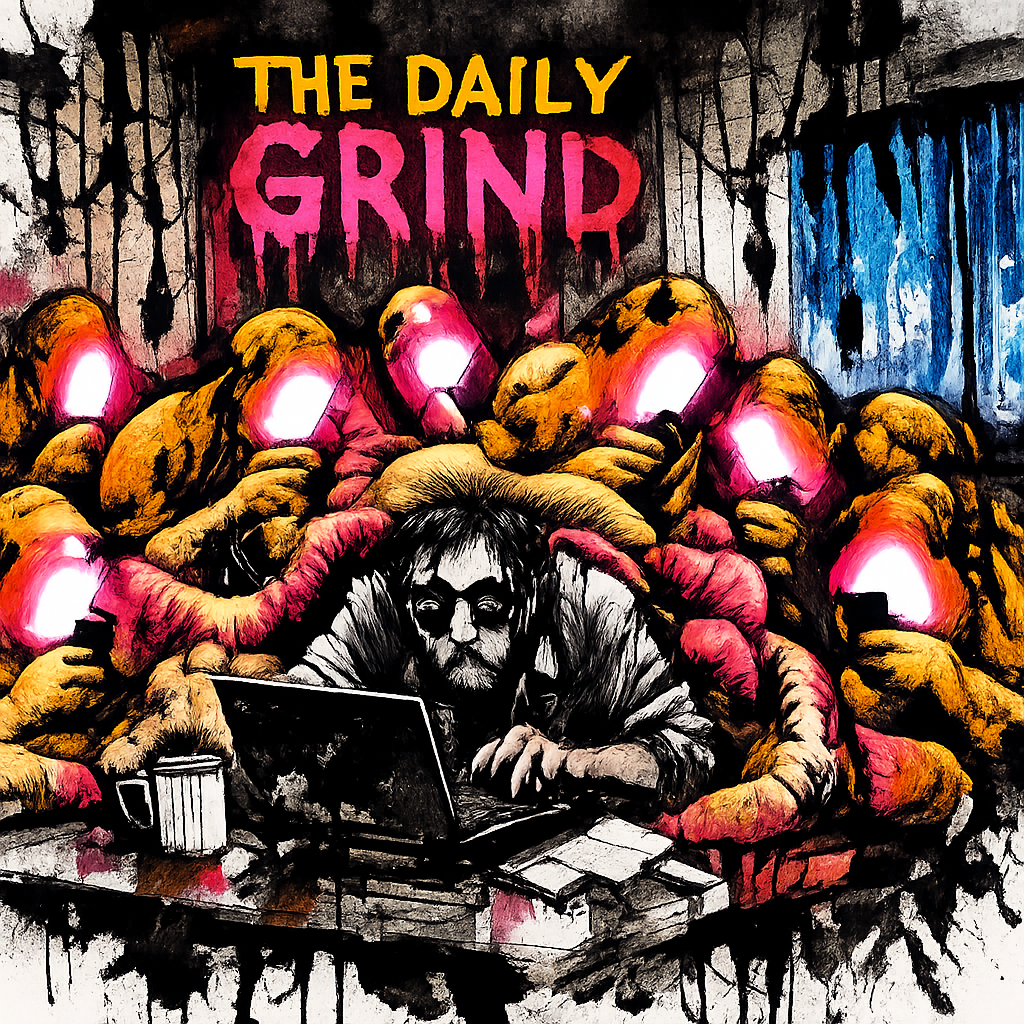
The air in this coffee shop—an aggressively sterile glass cube called ‘The Daily Grind’—smells like burnt oat milk and desperation. It is 2:28 AM on a Thursday in December 2025, and I am sweating through a shirt I haven’t changed in three days. The neon sign above the counter flickers with a terminal, epileptic stutter, buzzing like a dying insect. Outside, the rain is dissolving the city into a grey smear, but inside, the glow of a dozen screens illuminates the slack-jawed faces of the midnight crowd. They are all scrolling. We are all scrolling. Feeding the beast.
Feeding the Reptile: The Sordid Hunt for the Dhunu Joni 40-Minute Viral Video
I am staring at my own screen, my eyes dry and stinging, trying to make sense of the latest dispatch from the digital sewer. The trending topic of the hour, the thing that has gripped the collective consciousness of millions of hairless apes across the globe, is a “40-minute viral video.”
You’ve seen the search terms. You’ve probably typed them in yourself, skulking in the incognito tab of your browser, driven by that reptilian itch for scandal. ‘Dhunu Joni 40 minute full video.’ ‘Sweet_zannat leak.’ ‘Viral MMS Season 3.’ The internet is foaming at the mouth, a screaming, fleshy hydra tearing at the barricades of privacy, demanding to see the goods.
Synthetic Flesh and Digital Hallucinations: Why the Viral MMS Doesn’t Exist
Here is the punchline, the cosmic joke that would make God laugh if He hadn’t abandoned us to Mark Zuckerberg and the TikTok algorithm a decade ago: *’The video does not exist.”
It is a phantom. A digital hallucination. A ghost in the machine.
Two days ago, the mob was baying for a “19-minute video” allegedly featuring an Assamese influencer. That clip turned out to be a deepfake—a synthetic skin-suit stitched together by AI to destroy a young woman’s life for clicks. But the mob, terminal in its hunger, wasn’t satisfied with 19 minutes of fake smut. They wanted more. They wanted the ‘Director’s Cut’. And so, the “40-minute viral video” was born, not from a camera lens, but from the sheer, psychic force of millions of people searching for it.
I watched the trend rise in real-time, a towering monument to our collective brain rot. The search volume spiked in Andhra Pradesh, then Delhi, then the world. The algorithm, that blind idiot god, saw the hunger and began to feed it. Scam sites mushroomed instantly, promising the “Full 40-Minute Leaked Clip” but delivering only malware and pop-up ads for penis enlargement pills and crypto scams.
The Blind Idiot God’s Buffet: Algorithms, Malware, and the ‘6-7’ Brain Rot
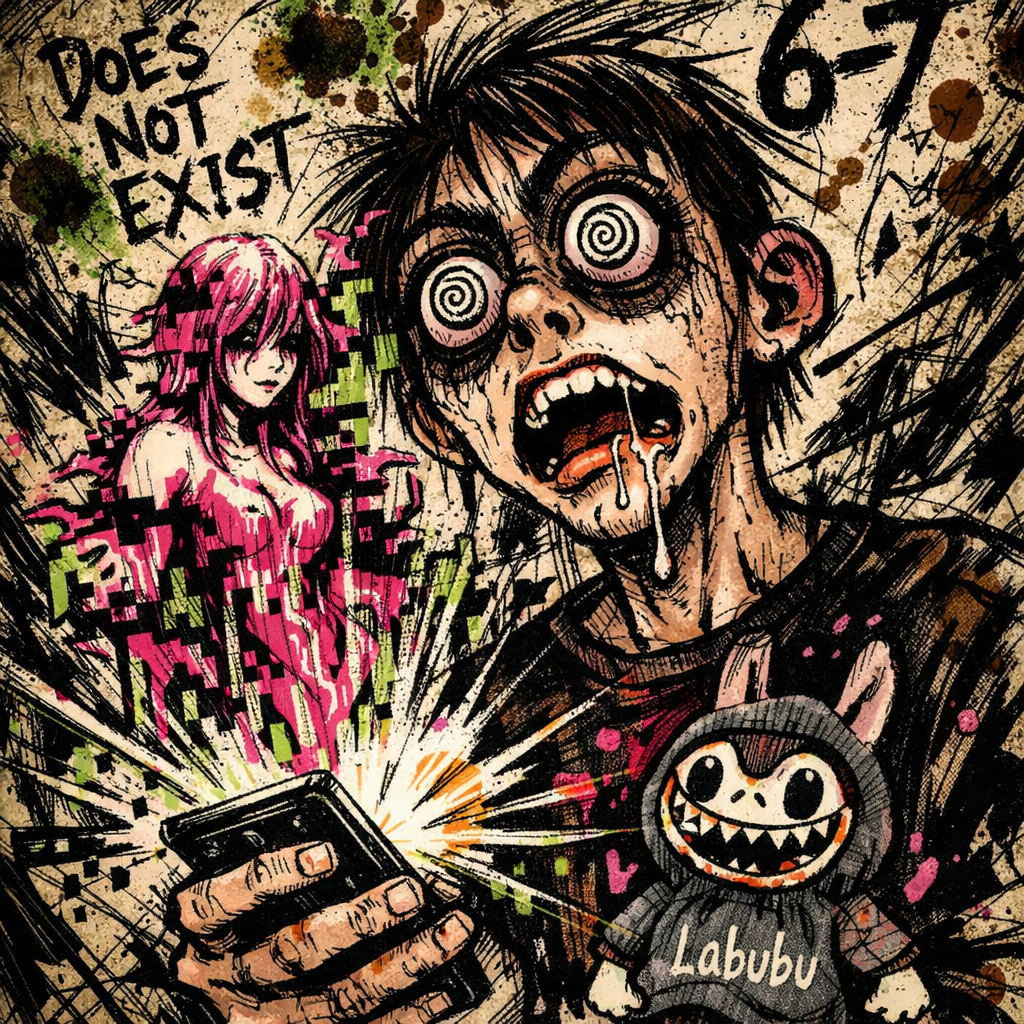
I turned to the kid at the table next to me. He looked about twenty, wearing a t-shirt with a picture of a “Labubu” doll—that creepy, grinning gremlin that Rihanna made famous last month. He was tapping furiously on his phone.
“You find it?” I asked, my voice cracking.
He looked up, eyes glazed with the blue light of the screen. “Find what?”
“The video. The 40-minute one.”
“Nah,” he said, shaking his head. “Everyone says it’s out there. Just gotta find the right link. It’s wild, man. They say it’s AI, but it looks real. That’s the vibe now, right?”
“The vibe,” I repeated. “Jesus Christ.”
He went back to scrolling. He didn’t care if it was real. Reality is a legacy format. It’s obsolete. The only thing that matters is the ‘hunt’. The dopamine hit of the search. We are no longer consumers of content; we are consumers of the ‘idea’ of content. We are chasing shadows on the cave wall, but the shadows are generated by a server farm in a basement in Macedonia and the cave is a 6.7-inch OLED display.
This is the state of the culture in late 2025. We have reached the event horizon of stupidity. Dictionary.com just named “6-7” the Word of the Year—a phrase that means absolutely nothing, a linguistic hiccup that went viral because… well, nobody knows why. It just ‘did’. It was “electric,” they said. It had “aura.” And now we have the Phantom Video.
The tragedy here isn’t just the violation of the woman at the center of this—though let’s be clear, what the internet is doing to Dhunu Joni is a savage, digital flaying. The tragedy is that we don’t care that it’s fake. The distinction between a human being and a collection of pixels has dissolved.
Manufacturing the Ghost: The Savage Flaying of Reality in the Search Results
I ordered another coffee. The barista, a girl with a piercing in her septum and a look of profound exhaustion, handed me the cup. “Six-seven,” she muttered, almost reflexively.
“What?”
“Six-seven,” she said again, a nervous tick. “It’s just… the vibe. You know?”
I took the coffee and retreated to my corner. The room felt heavy, pressurized by the invisible weight of all that data moving through the air. I looked at the search results again. ’40 minute viral video download link.’ ‘Is it real?’ ‘AI generated scandal.*
The experts are calling it a “digital ghost.” A search term that becomes a reality simply because enough people believe it exists. It’s the ultimate triumph of the simulation. We have bored ourselves so thoroughly with the real world—with its wars, its plagues, its melting ice caps—that we have decided to invent our own scandals out of thin air. We are manufacturing our own outrage, assembling our own victims from code and malice.
The kid with the Labubu shirt let out a sudden, sharp laugh. “Found it!” he shouted.
Heads turned. The air in the room grew electric.
“Real?” someone asked from the back.
“Nah,” the kid said, deflating. “Just a Rickroll. But the thumbnail looked legit.”
The room sighed, a collective exhale of disappointment, and went back to the scroll. The hum of the refrigerator seemed to get louder.
I drank my coffee. It tasted like battery acid and regret. This is the wasteland. We are wading through the digital sewage, hunting for things that aren’t there, terrified that if we stop scrolling, we might have to look at the world around us. And the world around us is dark, and quiet, and terrifyingly real.
Better to keep searching for the ghost. Better to stay in the feed.
I closed my laptop. The screen went black, reflecting my own face back at me—pale, distorted, and tired. For a second, I looked like a deepfake of myself. Then I blinked, and the illusion held.
More from the abyss, the algorithm in your head is eating your soul.
The discussion of AI deepfakes and misinformation feels particularly relevant given how easily fabricated content spreads—I actually found some related discussion on https://tinyfun.io/game/orbit-beats about spotting manipulated media. It’s a bit unsettling to think about the “phantom pornography” aspect and how that impacts individuals.