

They released the numbers. Some nameless, faceless entity in a server farm somewhere in the high desert, where the air is thin and cold and perfect for cooling the machines that are actively boiling our brains, decided to dump the national search history on us. A vibe check on the Republic’s terminal velocity. And what did we, the citizens of this late-stage, flickering empire, want to know in 2025?
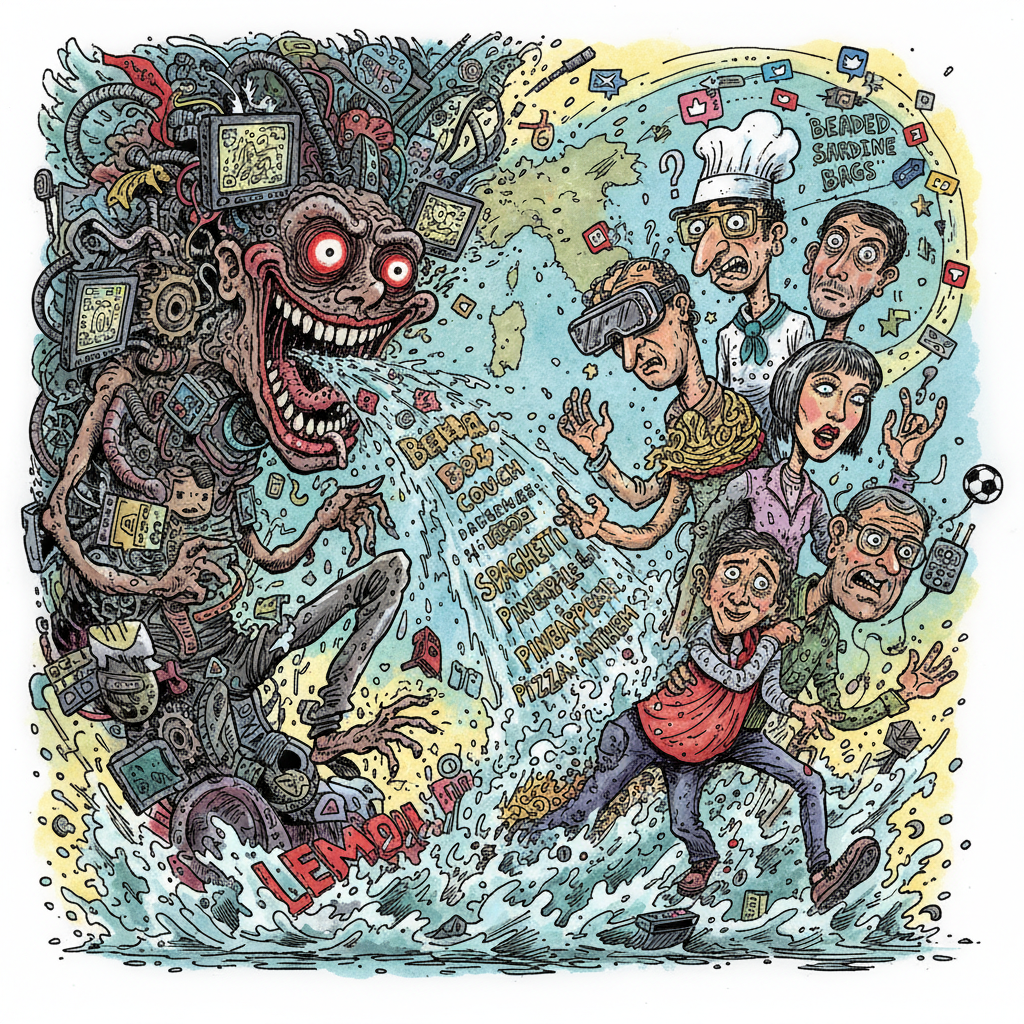
We wanted to know about the “Gen Z stare.” We searched for the “beaded sardine bag.” We looked for “Tai chi walking” and something called, with a certain lyrical dementia, “Tralalero Tralala” under the category of “Italian Brainrot.”
Jesus Christ. Read that back to yourself. Italian Brainrot. It’s not a medical condition; it’s a TikTok meme cycle. It’s a cultural tapeworm. And it’s inside all of us now, feasting on whatever scraps of genuine curiosity we have left.
Your Digital ID: What the National Search History Says About Our Collective Brainrot
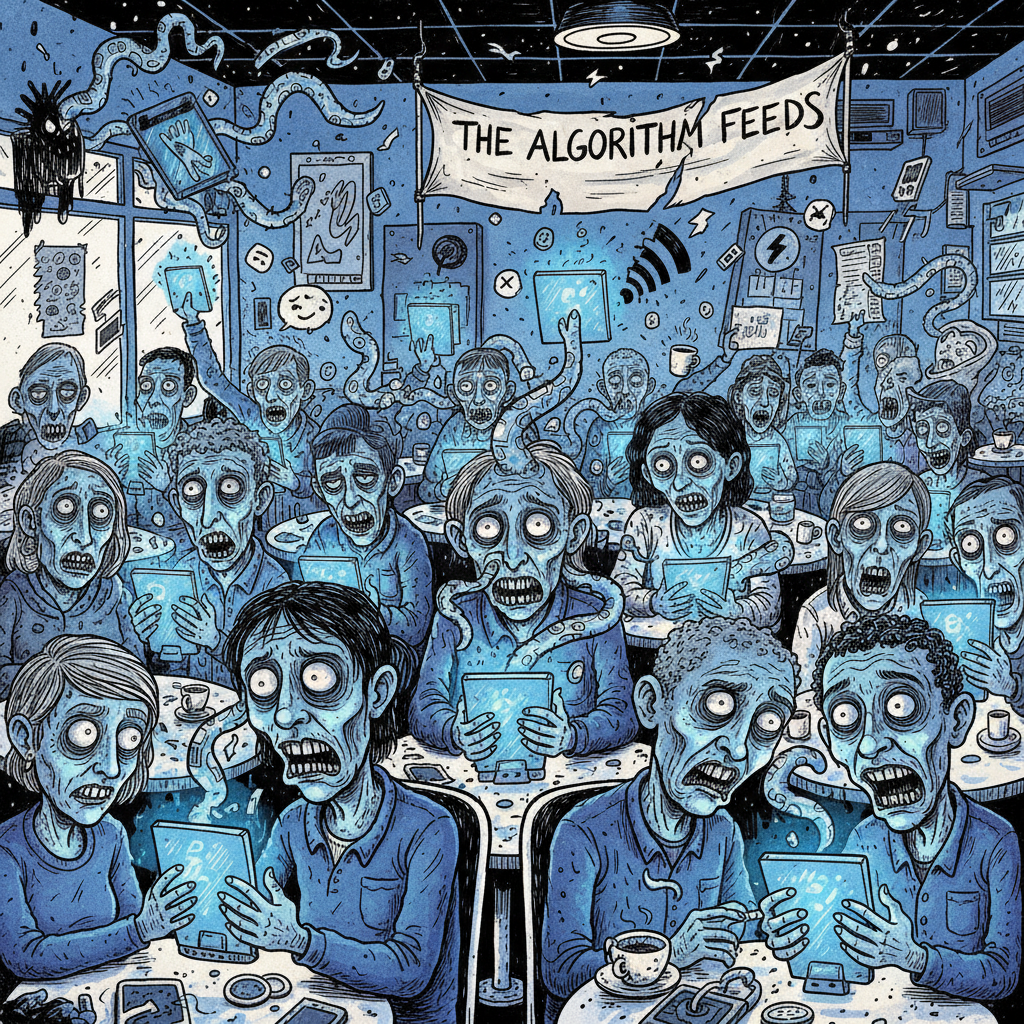
I’m sitting in a coffee shop in Austin, the kind of place that smells of burnt beans and entitlement. The air is thick with the low hum of laptops and the high-pitched whine of anxiety. Every face is bathed in the same blue light, the same slack-jawed, dead-eyed trance. This is the source code. This is the factory floor where the cultural sludge is refined. I saw a kid, maybe nineteen, with eyes like two marbles rolling around in a skull, staring at his phone with an intensity that used to be reserved for religious texts or the face of a new lover. He wasn’t blinking. Maybe he was practicing.
The “Gen Z stare,” for the uninitiated, is that perfect, hollowed-out look of someone who has seen everything and felt nothing. It’s the thousand-yard stare of a soldier who has fought a long, bloody war on the digital front lines of manufactured outrage and algorithm-fed psychosis. It’s the face of a generation raised by a pocket-sized chaos engine that rewards feral nonsense and punishes nuance.
And what are these veterans of the content wars searching for? Meaning? Truth? God? No. They’re looking for the “boneless couch” and “ballerina sneakers.” They’re obsessing over a toy line called Labubu and looking up KPop Demon Hunters. It’s a savage, desperate scrabble for identity in the rubble of a culture that has commodified everything, even dissent. You’re not a person; you’re a collection of trending aesthetics. Your personality is a curated list of search terms.
The Algorithm’s Grin: Trading Soul for Trending Aesthetics on the Digital Front Lines
The report mentions the rise of the “performative male contest,” a search for an aesthetic defined by matcha, tote bags, and books. It’s not about reading the books, mind you. It’s about being seen with them. It’s about performing intelligence, performing sensitivity, performing a version of masculinity that is palatable to the algorithm. It’s all surface, no substance. A generation of beautiful, anxious ghosts haunting the machine.
I took a walk to clear my head, but there’s no escape. The wasteland is everywhere. The architecture is glass and steel, but the vibe is pure decay. Every conversation I overhear sounds like it was written by a chatbot. Snippets of therapy-speak mashed up with meme-talk and brand names. Someone told their friend their breakup was giving “savage villain era,” and the friend nodded sagely, as if this was a profound diagnosis of the human condition and not just word salad spat out by the great content machine.
This isn’t evolution. This is a system collapsing in on itself. We’ve outsourced our brains to a handful of tech monopolies, and they’ve filled the vacuum with this garbage. This electric brain rot. We ask Google the most intimate questions of our lives, questions we’d be ashamed to ask another human being. “Why are Leos so attractive?” “Why are Aquarius so stubborn?” We’re turning to a search engine for cosmic answers, hoping the divine logic of the algorithm will give us the meaning our priests, our parents, and our politicians have failed to provide.
The Algorithm’s Gospel: Trading Genuine Inquiry for Performative Pseudoscience
And the algorithm just smiles, its teeth made of recycled data, and feeds us more of what we want. It’s a closed loop. A snake eating its own tail into infinity. You search for Italian Brainrot, you get Italian Brainrot, and soon your entire reality is filtered through the lens of Italian Brainrot, and you have no idea how you got there or how to get out. You’re just… there. Staring.
The most terrifying part isn’t the absurdity of the search terms. It’s the cold, hard data of it all. This is us. This is our collective id, scraped raw and laid bare. A nation obsessed with hyper-niche aesthetics, celebrity idiocy, and the kind of deep, soul-crushing anxiety that can only be soothed by the next 15-second video of something, anything, happening to someone else. It’s a doomed feedback loop.
I finished my coffee. It tasted like ashes. The kid with the stare was still there, his thumb moving in a slow, hypnotic scroll. He’s the future. He’s what’s next. A perfectly optimized user, his desires and fears tracked, cataloged, and sold back to him in an endless stream of content designed to keep him staring. He’s not looking for a beaded sardine bag because he wants one. He’s looking for it because the machine told him to. And that, right there, is the whole damned story. We’re not searching anymore. We’re being searched.
More rot from the algorithm, check the Gospel of the Gape
Leave a Comment