
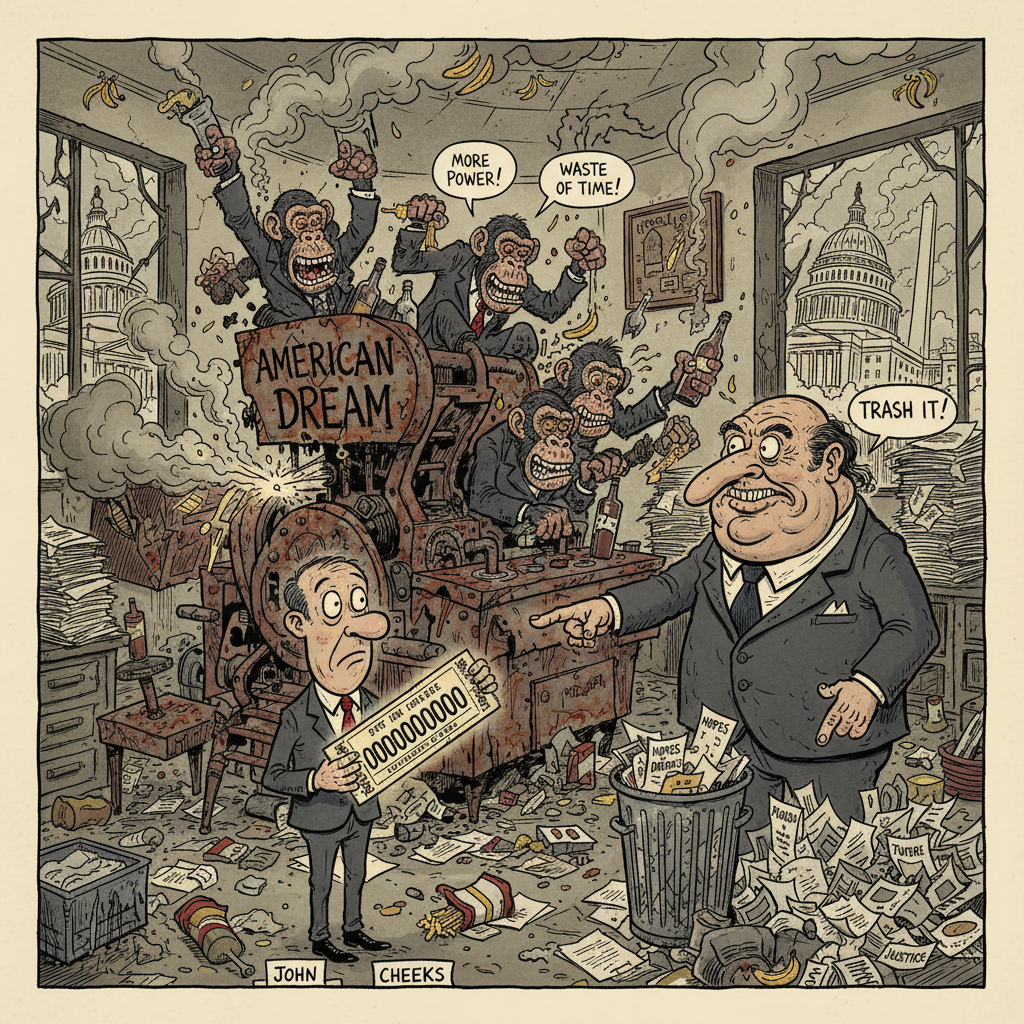

Some days you wake up and the world makes a kind of twisted, malevolent sense. You see the gears turning, the rust flaking off the great machine, and you know, deep in your gut, that the whole damn thing is rigged. Then there are other days—days you read about a man like John Cheeks—and you realize the machine isn’t just rigged; it’s broken, comically and tragically off the rails, being operated by a gang of drunken chimps who lost the instruction manual somewhere in the bowels of a DC office park.
I was somewhere around my third cup of coffee, staring into the abyss of the morning news cycle, when the story hit me like a shot of bad whiskey. John Cheeks, a man from the belly of the beast itself, Washington D.C., thought he had it. He’d grabbed the golden ticket, punched his way out of the rat race, and secured the kind of fortune that’s supposed to wash away all your sins: $340 million.
He didn’t even see the drawing. Who does? That’s for the true believers, the ones who think their cosmic alignment with a set of bouncing bingo balls is preordained. Cheeks was a casual player, a man who threw his hat in the ring when the pot got obscene enough to matter. He checked the Powerball website a day later, and there they were, glowing on the screen like a holy scripture—his numbers, a sacred combination of family birthdays and personal numerology.
And in that moment, John Cheeks became the living embodiment of the American Dream. He was every schmuck who ever bought a ticket with the gas money, every poor bastard who ever looked at his mounting bills and thought, ‘just this once’. He had done it.
He didn’t scream. He didn’t run naked through the streets. He just “politely called a friend,” took a picture, and went to sleep. That, right there, is the mark of a man who can’t quite believe his luck, a man who’s been conditioned by a lifetime of near misses and broken promises to not count his cash until it’s in his hand. Wise man.
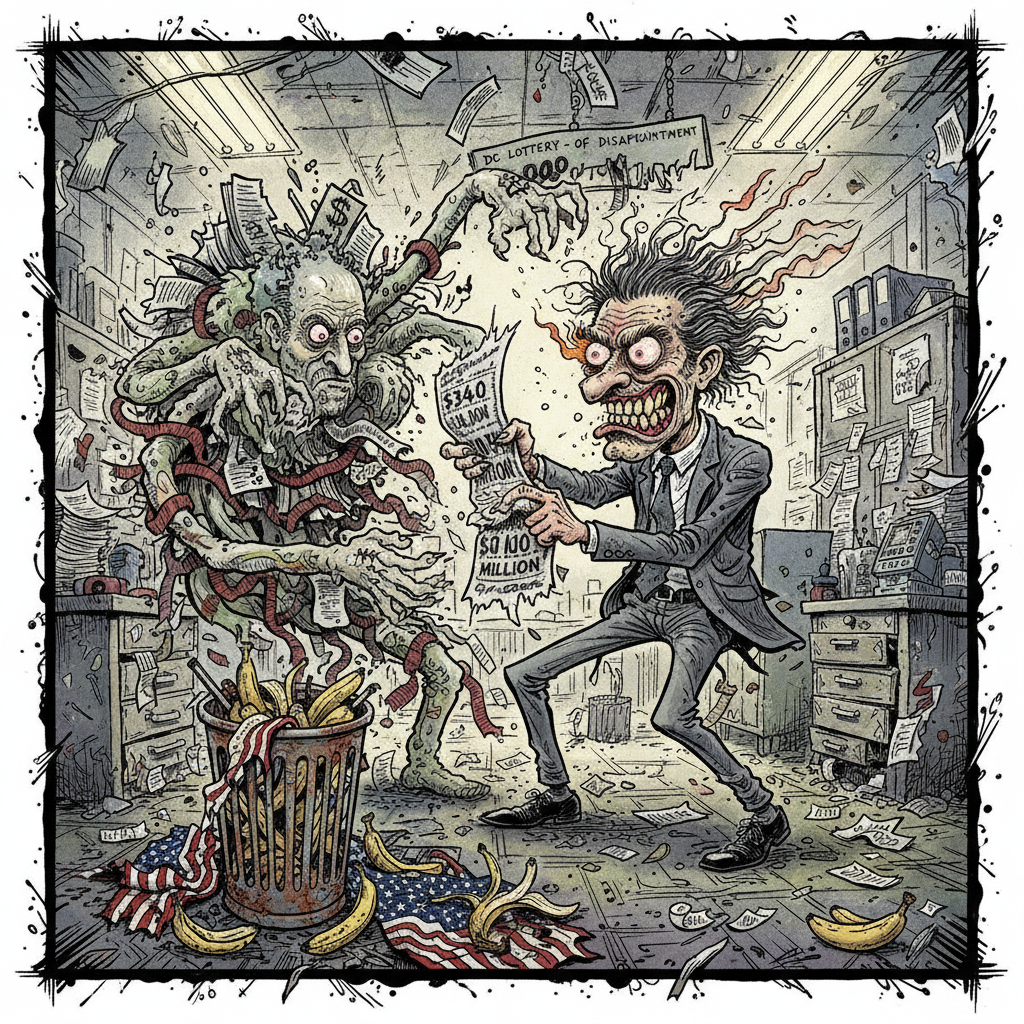
Because when he rolled up to the DC Office of Lottery and Gaming, ready to claim his mountain of gold, the machine coughed, sputtered, and spit a fat loogie right in his eye. The ticket, they said, was no good. His claim was denied. Why? Because the numbers on the website—the official, government-sanctioned, this-is-the-real-deal website—were a “mistake.” A goof. A slip of the digital finger by some IT contractor named Taoti Enterprises who was running a “test.”
For three full days, the dream was alive on that website. For 72 hours, John Cheeks was a multimillionaire, and the lottery commission was none the wiser. This wasn’t some back-alley numbers game; this was the goddamn Powerball. And they screwed it up.
The savage journey into the heart of bureaucratic hell had just begun. When Cheeks presented his ticket, a claims staffer—some nameless, faceless cog in the failure machine—reportedly looked at this man’s validated, screen-shotted, life-altering ticket and told him, “Hey, this ticket is no good. Just throw it in the trash can.”
‘Just throw it in the trash can.’
Let that sink in. The sheer, unadulterated gall. Can you picture the scene? The fluorescent lights humming, the smell of stale coffee and desperation hanging in the air. Here’s a man holding what he believes is the key to a new reality, and some pencil-pusher tells him to toss it in the bin with the banana peels and used staples. It’s a perfect metaphor for the death of the American dream: a dream so disposable it belongs in the garbage.
But John Cheeks did not throw it away. In an act of beautiful, righteous defiance, he refused to let them memory-hole his jackpot. He put the ticket in a safe deposit box, found a lawyer with fire in his eyes, and decided to sue the whole rotten enterprise.
This is no longer about just the money. This is a deep dive into the very nature of reality in this country. If the official numbers on the official website aren’t real, then what is? We’re living in a world of pure, uncut phantom data. The stock market is a fiction, the news is a fever dream, and the lottery, the last great hope for the common man, is apparently just a placeholder run by interns testing time zones.
The contractor’s defense is that it was all an accident. An “obvious error.” Obvious to whom? It wasn’t obvious to Cheeks, and it wasn’t obvious to the poor souls who checked the site for three days. This isn’t just negligence; it’s a profound betrayal of the one thing a lottery is supposed to sell: trust. The whole game is built on the sacred pact that if your numbers come up, they pay. End of story. To break that is to admit the whole thing is a sham.
This is a wild ride, a story that peels back the veneer of competence and shows the chaos underneath. It’s a tale of one man against the system, not a system of malice, but one of staggering, soul-crushing ineptitude. They dangled $340 million in front of his face and then snatched it back with the casual cruelty of a bored god, telling him it was all just a mirage. Now it’s in the hands of the courts, another blood sport for lawyers to hash out while John Cheeks waits to see if his ghost of a fortune can ever be made real.
I don’t know if he’ll win. The house always has an edge. But I know that for a few precious hours, he held the universe in his hand, only to find out it was a cheap knock-off. And that, my friends, is the most American story I’ve heard all year.




Leave a Comment